Why should your ideal customers choose you over the competition?
That’s the most important question every B2B service company needs to answer
Because your ideal customers ask it every time they visit your website, read your content, see your ads, open your emails, watch your demo, or talk to your sales team.
Why you?
Most B2B service companies can’t answer that question clearly. And the ones who try to answer it default to “we care,” “we’re the industry leader,” or “we have the best quality.”
All lazy ‘differentiators’ that don’t really make you different.
Your ideal customers need a compelling reason to choose you, especially when they can find another provider in 2 seconds on Google or ChatGPT.
So, how do you answer that question?
The Case for Clarity
Businesses have no shortage of options when it comes to solving their problems.
According to Marketing LTB, a typical B2B buyer conducts between 8 to 12 independent searches across multiple channels and devices before engaging directly with a vendor.
The Content Marketing Institute’s 2026 report finds that B2B buyers consume an average of 13.4 pieces of content before contacting sales, with 67% of the buying journey self-directed.
Statistics say that buyers are very far along in the purchasing process before talking to sales, often 60% to 80% complete, having already identified their needs, researched solutions, and largely established requirements, with many choosing a preferred vendor before any sales interaction.
Meaning, B2B service buyers are researching options, visiting websites, consuming content, and making their decision based on your messaging and marketing.
If you don’t have a clear and compelling reason for them to choose you, you’re making it hard for them to decide.
The Comparison Trap
Like it or not, your ideal customers are comparing you to similar companies in your industry.
The average B2B buyer researches 2 to 7 websites directly, and consumes between 10 to 15 different sources of information (including vendor pages, review sites, and industry blogs) before ever contacting sales.
They often know more about your competitors than you do.
Imagine searching for a solution like yours, landing on the websites of 5 different companies, and they all have a similar message:
- “We are the industry leader”
- “We care about our customers”
- “We provide quality solutions for XYZ”
- “Reliable partner for the XYZ industry”
You see that message on every. single. website.
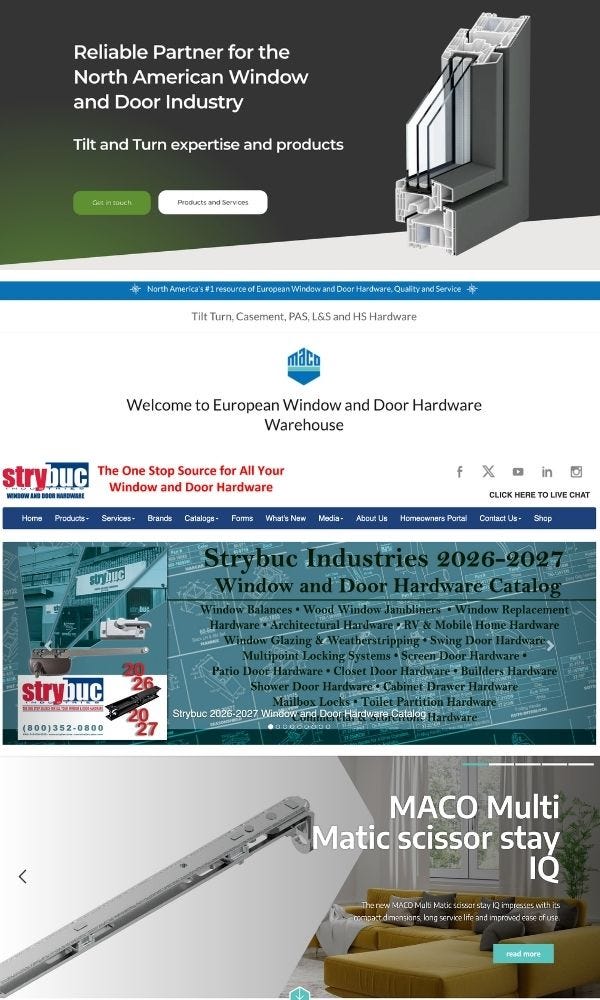
Just take a look at these 4 competitors in the window and door hardware industry:
Which one stands out? Which one makes it clear why you should choose them? Which one sounds different?
They all say relatively the same thing, making it hard for customers to choose one over the other.
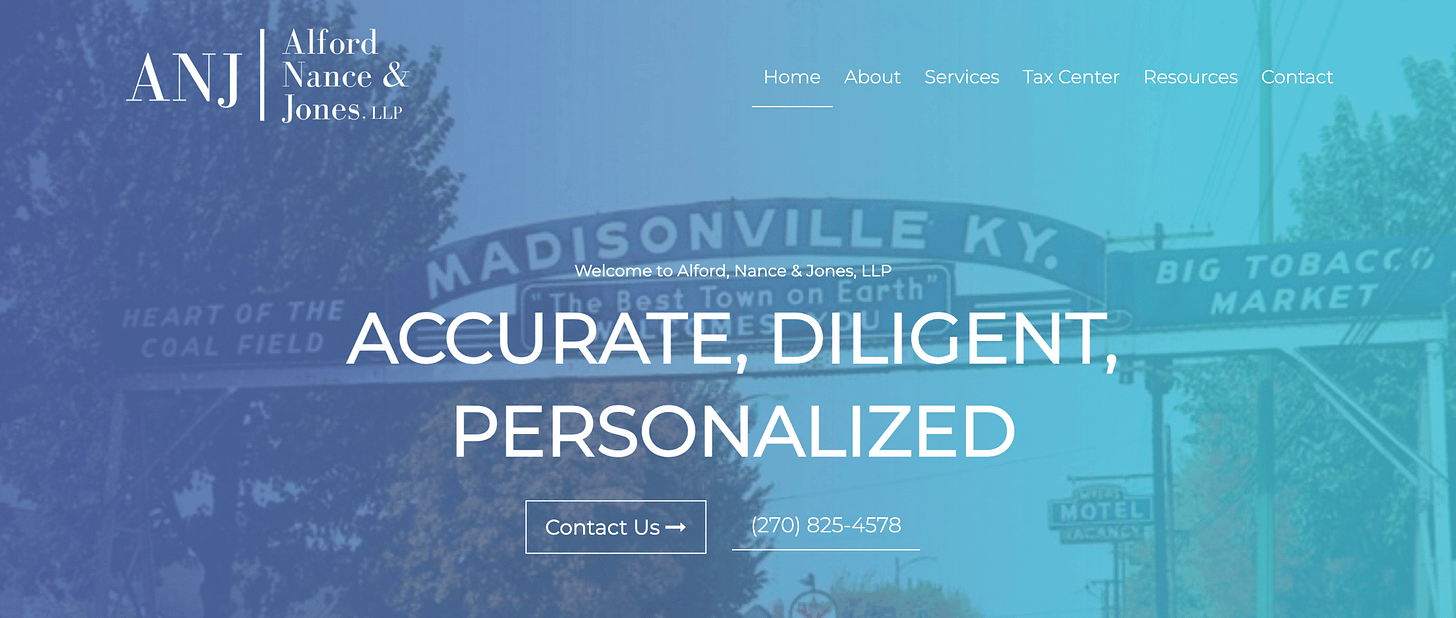
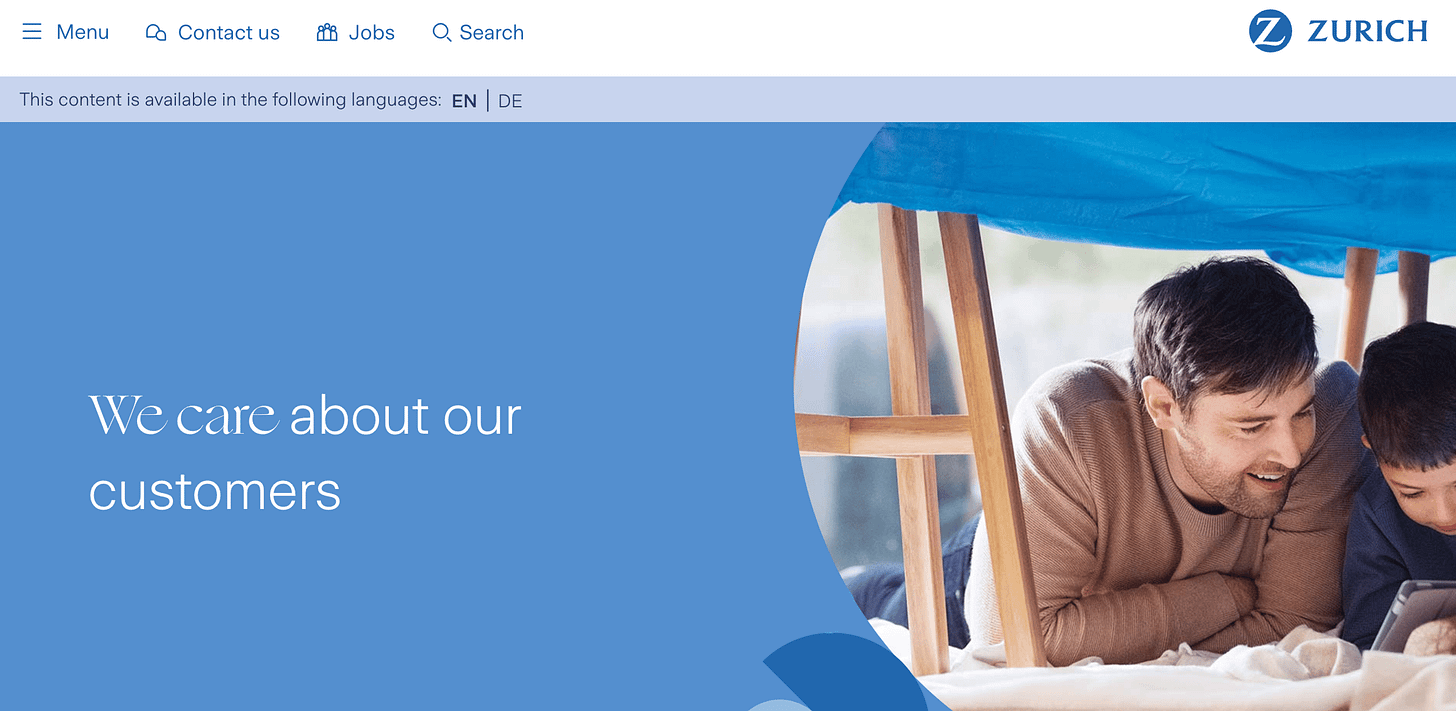
Or, you see something vague like this accounting firm (first) and insurance company (second):
Who wouldn’t want their accounting firm to be accurate, diligent, and personalized? That’s a basic requirement for paying someone to handle my business’s finances.
Or an insurance company that actually cares about its customers? You’d better care about me and my business if I’m giving you money.
If you sound like your competitors, or if you offer a basic requirement to get money, you aren’t making it easy for people to choose you.
Why You?
None of the businesses above makes it clear why you should choose them.
That’s the case for most B2B service companies — their ‘differentiators’ are vague, similar, or basic expectations for doing business.
And that makes it hard for customers to choose you.
If you want customers to regularly choose you, do these two things:
Be Different
Not only do you need a compelling differentiator — something you do that your ideal customers will pay for and your competitors can’t or won’t copy — but you also need to look and sound different from your industry.
Take Define Instruments, for example.
They are an IoT remote monitoring company that installs systems to pull data and turn it into actionable next steps for their clients.
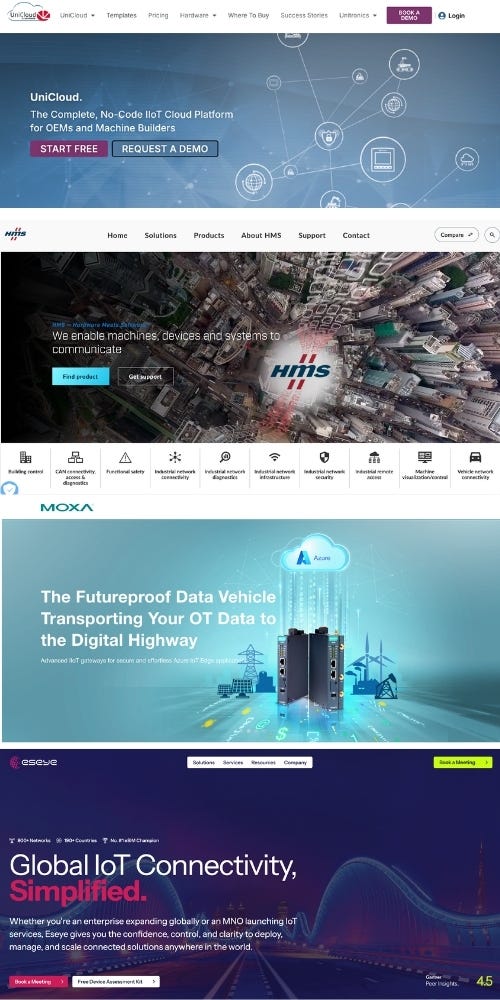
Here’s how their industry looks and sounds:
Similar messages, similar designs, and they all use some shade of blue in their color palette. They all tried to look like the industry, and made it hard to stand out.
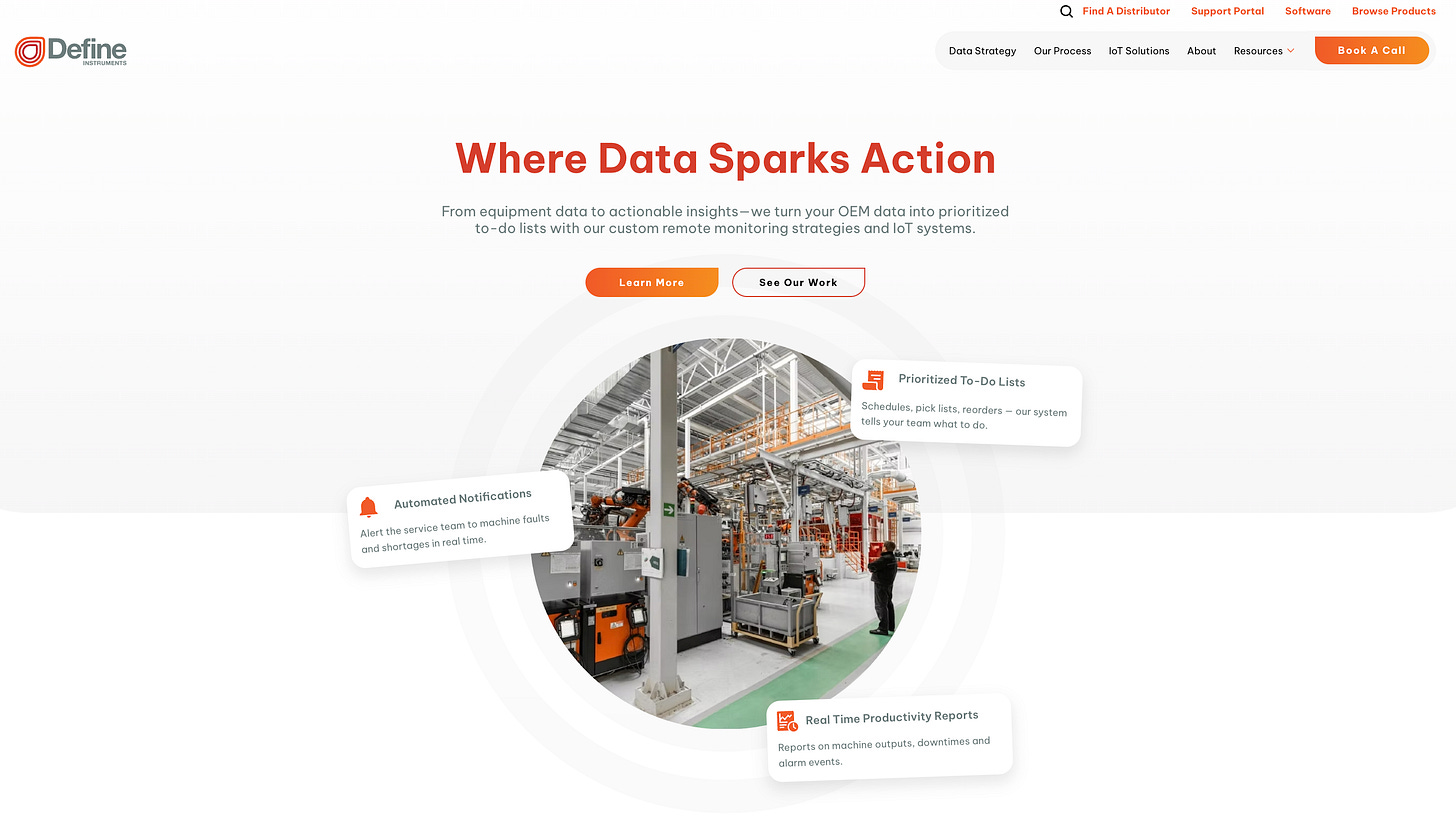
Now take a look at Define:
Not only do they look and feel different — orange color palette, clean design, custom icons, and none of the same links and flow lines you see on every other IoT website.
But, they also have a clear differentiator — turning data into prioritized to-do lists.
Compelling Message
Next, you need a compelling message.
Something that communicates your differentiator and the transformation clients can expect when they work with you.
Take Define’s message from the screenshot above:
Where Data Sparks Action
It’s compelling, communicates their differentiator, and addresses a pain point their ideal customers face: collecting data that doesn’t change anything.
Even their one-liner is compelling:
From equipment data to actionable insights—we turn your OEM data into prioritized to-do lists with our custom remote monitoring strategies and IoT systems.
It clarifies their differentiator (prioritized to-do lists), their ideal customers (OEMs), and how they do it (custom remote monitoring strategies and IoT systems). That last bit also helps with SEO.
What you won’t find on their website: claims that they care about their customers, are the industry leader, provide the best quality, or are a provider for the OEM industry.
Saying those things would make them sound like every other IoT business.
Become the Only Choice
Two quick steps you can take today to get customers to choose YOU:
1/ Pull up your competitors’ websites, screenshot the message in their hero sections, and compare it to yours. Ask yourself:
- Are we saying something different than the market?
- Is our message clear as to the transformation we bring?
If those answers are not a resounding Yes!, you are making it hard for customers to choose you.
2/ Grab your team, map out the process you take clients through, and look for one thing that matters to your ideal customers.
For Define, it was the prioritized to-do lists. Most IoT vendors collect data and push it to a dashboard with some alarms. Define’s system outputs a list that tells their clients what to do based on that data — service schedule, pick list, etc.
Find something like that. Wrap your messaging around it.
Extra Help
Uncovering and communicating the reason customers should choose you is not easy.
Most businesses can’t see it on their own. They are too close to it, operate with it every day, and don’t see it as impressive.
It often requires a set of outside eyes to see what makes you different.
That’s what the BrandOS helps you do — uncover your differentiator, communicate it in a compelling way, and build your entire brand so people feel it in every interaction.
Don’t go another day as an option.
Make it clear why customers should choose you, and implement that reason in every aspect of your business.
Until next week,
#SassyJason out.
✌🏼